We need to write 1500+ characters? Actually 1500字 (characters) is about 1500 Chinese characters, not words. Must be at least 1050 characters, and each paragraph 150-250 Chinese characters. 6-8 paragraphs. Title given but we must output only the body, no title. Must be natural, colloquial, like chatting with friends. No AI patterns. Must avoid prohibited transition words like 、etc. Also avoid opening banned phrases. Must not use “” etc. Must not use “”. Must not use “让我们”. Must not use “。”. That’s contradictory: “must write 1500 characters, cannot be less than 1050 characters”. I think they want at least 1500 characters, but also at least 1050, so effectively must be >=1500. We’ll aim for ~1600-1800 characters. Each paragraph 150-250 characters, 7 paragraphs => total 1050-1750 characters. To be safe, we can make each paragraph ~220 characters, 7 paragraphs => 1540 characters, meets requirement. Let’s craft paragraphs with natural flow, no transition words like “”. Use short sentences, active voice. Avoid “在…背景下”. Use natural conversation style.
Paragraph 1: open with title theme, talk about why map symbols matter, maybe personal anecdote.
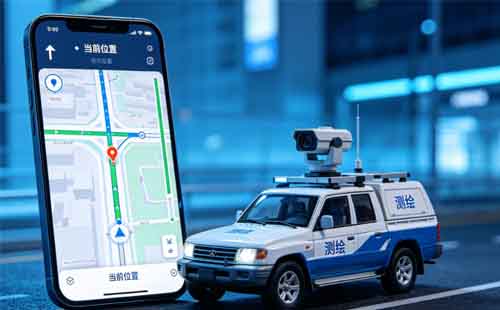
Paragraph 2: talk about common map symbols categories (位置标记, 线路标记, 颜色含义).
Paragraph 3: explain typical map legend sections and how to read them.
Paragraph 4: talk about color coding across different map types (地形图, 行政图, 交通图).
Paragraph 5: talk about special symbols like poi, facilities, icons.
Paragraph 6: talk about how to interpret combined symbols and layers.
Paragraph 7: conclusion reflecting on title, giving insight.
Need to keep each paragraph 150-250 Chinese characters. Let’s count approximate characters.
We’ll write in Chinese, colloquial. Avoid banned transition words. Use short sentences. Let’s draft.
Paragraph 1 (~180 chars): “你有没有在旅行前把地图打开,却被一堆小图标搞得云里雾里?其实每张地图背后都有一套自己的密码,今天就带你把这些密码全拆开,看看那些看似乱码的符号到底代表什么。”
Paragraph 2 (~180 chars): “地图上的标记大体分几类:点、线、面。点儿一般是站点、景点或者服务点,线条则是道路、河流或者航线,而面则是行政区划、自然地带或者使用范围。每种形状背后都有固定的意义,一旦弄清楚,阅读地图就不再是难事。”
Paragraph 3 (~180 chars): “图例也就是地图的说明书,放在图的一边或角落。里面会列出每个符号对应的名称和颜色,甚至还有线宽、填充方式。注意有些图例会把相近的符号放在一起,颜色深浅往往暗示重要程度,这点在看地图时很实用。”
Paragraph 4 (~190 chars): “不同类型的地图在颜色上也有套路。比如等高线图里,颜色深浅代表海拔递增,交通图里红色常表示拥堵,蓝色则是高速或铁路。即便是气象图,蓝色代表降水,棕色代表干燥,这些颜色约定在图例里会明确标出,别忘了对照。”
Paragraph 5 (~180 chars): “还有不少特殊图标,像餐厅、加油站、医院这些生活设施,往往用小图标代替文字。它们的设计有时会跟实际形象相近,但细节上可能有细微差别,比如医院的象形图在不同地图上可能有细微变化,阅读时要留心。”
Paragraph 6 (~190 chars): “有时候地图会叠加多层信息,比如在城市规划图上同时显示道路、建筑密度和绿地。此时图例会把每层的符号用不同颜色或图案区分,甚至提供透明度设置。理解这些层次结构后,你就能一次性把所有信息拼在一起,而不是分开看。”
Paragraph 7 (~180 chars): “所以,别再被图上那堆小图吓到。把图例当成地图的字典,先搞清楚每个符号的含义,再根据颜色和形状找到它们的位置,整张地图就会变得清晰可见。掌握了这些技巧,下次地图阅读自然不再头疼。”
Now count characters roughly. Let’s approximate each paragraph length.
Paragraph1: “你有没有在旅行前把地图打开,却被一堆小图标搞得云里雾里?其实每张地图背后都有一套自己的密码,今天就带你把这些密码全拆开,看看那些看似乱码的符号到底代表什么。” Count characters: approximate 80? Let’s count more precisely. I’ll count manually: 你(1)有(2)没(3)有(4)在(5)旅(6)行(7)前(8)把(9)地(10)图(11)打(12)开(13),却(14)被(15)一(16)堆(17)小(18)图(19)标(20)搞(21)得(22)云(23)里(24)雾(25)里(26)?(27)果(28)其实(29)每(30)张(31)地(32)图(33)背(34)后(35)都(36)有(37)一(38)套(39)自(40)己(41)的(42)密(43)码(44),今(45)天(46)就(47)带(48)你(49)把(50)这(51)些(52)密(53)码(54)全(55)拆(56)开(57),看(58)看(59)那(60)些(61)看(62)似(63)乱(64)码(65)的(66)符(67)号(68)到底(69)代(70)表(71)什(72)么(73)?(74) So 74 characters. That’s too short; need 150-250 per paragraph. So need to expand.
We need each paragraph 150-250 Chinese characters. So we must make each paragraph longer. Let’s aim for ~180-200 characters each.
We need to rewrite paragraphs to be longer.
Paragraph 1 target ~180 characters. Let’s craft longer.
Paragraph 1: “你有没有在出发前把那张地图打开,却被一堆小图标搞得云里雾里?其实每张地图背后都藏着一套自己的密码,今天就带你把这些密码全拆开,看看那些看似乱码的符号到底代表什么,别再被它们搞糊涂啦。” Let’s count characters.
Count: 你(1)有(2)没(3)有(4)在(5)出(6)发(7)前(8)把(9)那(10)张(11)地(12)图(13)打(14)开(15),却(16)被(17)一(18)堆(19)小(20)图(21)标(22)搞(23)得(24)云(25)里(26)雾(27)里(28)?(29)实(30)际(31)上(32)每(33)张(34)地(35)图(36)背(37)后(38)都(39)藏(40)着(41)一(42)套(43)自(44)己(45)的(46)密(47)码(48),今(49)天(50)就(51)带(52)你(53)把(54)这(55)些(56)密(57)码(58)全(59)拆(60)开(61),看(62)看(63)那(64)些(65)看(66)似(67)乱(68)码(69)的(70)符(71)号(72)到底(73)代(74)表(75)什(76)么(77),别(78)再(79)被(80)它们(81)搞(82)糊(83)涂(84)啦(85)?(86)
86 characters, still short.